Transcribed by the community of Chunom.org.
IDS sequences in the texts and their Unicode characters
排歌⿰粦武棋泊
Bài Ca Răn Cờ Bạc
A moral poem of 1921 in the song thất lục bát metre, 108 lines long, spoken by a woman to both women and men. She mocks the educated men who waste their days on cards, dice and character riddles while the world races for rank and riches. Her target is gambling, which she sees as the ruin of the household, and she portrays the gambler with sharp irony.
108 lines transcribed by phankhanhtoan2002Date: 1921
𧊉花新傳
Bướm Hoa Tân Truyện
Story of Butterflies and Flowers (woodblock version) · A verse tale in dialogue between a butterfly and a flower, in the woodblock edition reprinted in January 1916 by Quán Văn Đường. In the spring the butterfly courts the flower, who answers with doubts about the sincerity and the fate of such love.
404 lines transcribed by trungDate: reprint 01/1916

胡春香詩集
Hồ Xuân Hương Thi Tập
A collection of short poems attributed to Hồ Xuân Hương, in 31 pages (poems), of which the transcription is still unfinished. The subjects are everyday objects and sights – a well, a fan, a sleeping woman, the moon, caves and mountain passes – treated with the wit and double meanings for which the poet is known.
196 lines transcribed by phankhanhtoan2002Author: Hồ Xuân Hương
訓女演歌
Huấn Nữ Diễn Ca
A teaching poem in lục bát “for the instruction of girls” (huấn nữ diễn ca), 184 lines. It sets out how a woman should live, from her girlhood in her parents’ house through marriage and motherhood, by the ideals of the old Confucian “three obediences and four virtues”.
184 lines transcribed by phankhanhtoan2002Date: 1946-1956
𥙩𫯳終
Lấy Chồng Chung
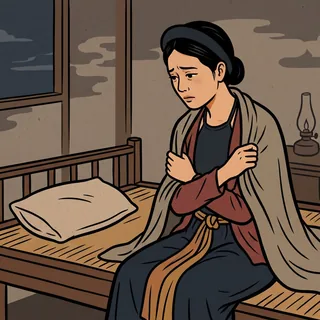
Sharing a Husband · A bitter poem of eight lines about being a co-wife. While one wife lies warm under the quilt, the other lies in the cold; the husband comes “twice a month, if at all”, and the effort she puts in is like work for hire without pay. She ends by thinking that, had she known, she would have stayed single.
8 lines transcribed by phankhanhtoan2002Author: Hồ Xuân Hương
劉平楊禮新傳
Lưu Bình Dương Lễ Tân Truyện
A long verse retelling, in 582 lines on 15 pages, of the well-known story of the scholar friends Lưu Bình and Dương Lễ. Dương passes the examination and rises, Lưu fails and falls into poverty; when Lưu comes to him for help, Dương coldly turns him away, but only to spur him on. The tale praises friendship, faithfulness and a wife who stands by her husband.
582 lines transcribed by phankhanhtoan2002Date: 1919
美女貢胡
Mỹ Nữ Cống Hồ
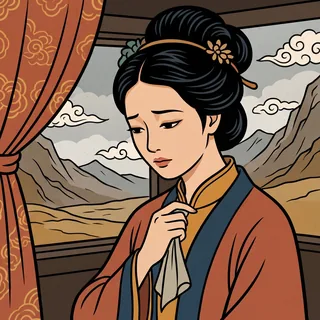
Story of a beautiful woman · “Mỹ nữ cống Hồ” (A beauty given as tribute to the Hồ), a lament in song thất lục bát (189 lines, seven pages), printed in 1921 by Phúc An Đường, Hanoi. A gifted woman, handed over to a barbarian king to buy peace, mourns her fate.
189 lines transcribed by trung
阮達阮生新傳
Nguyễn Đạt Nguyễn Sinh Tân Truyện
A long verse tale of two poor brothers from Bình Lục, Nguyễn Đạt and Nguyễn Sinh, who leave home to study for the examinations. Sinh, burly and plain of face, is mocked in a judge’s house but wins the judge’s respect with a poem on the moon, and the brothers go on to success in the examinations.
251 lines transcribed by phankhanhtoan2002
人問月答
Nhân Vấn Nguyệt Đáp
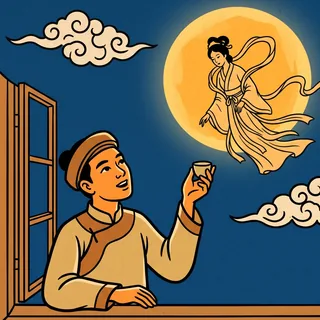
Dialogue with the Moon · A poem in the form of a dialogue with the moon. On a clear spring night in an inn the poet asks “Aunt Moon” how old she is, why she is so carefree and how far her palace is; the moon answers that she shines for everyone and tells the good from the bad. The poet ends with the wish to reach the moon and marry Hằng Nga.
60 lines transcribed by trung
桂山三元詩集:改良賦
Quế Sơn Tam Nguyên Thi Tập Cải Lương Phú
Vietnamese Folk Theatre · A rhymed prose piece (phú) on “reform” (cải lương), in the collection of poems “Quế Sơn tam nguyên thi tập”. Written in a lively, spoken style that strings together dozens of proverbs, it is the author’s call to his “brothers” to think and to work in a changing world.
153 lines transcribed by trungAuthor: Nghè Liên Bạt
國音詩集
Quốc Âm Thi Tập
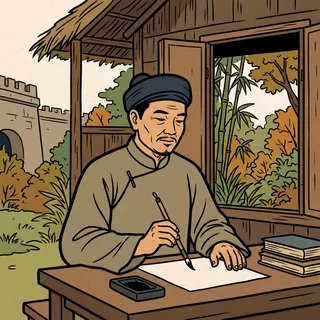
A collection of poems in Nôm attributed to Nguyễn Trãi (Quốc âm thi tập, written around 1440), here in the printing of 1868. The twenty poems transcribed (eight lines each) sing of a simple life in a hut or hermitage among bamboo, plum and pine.
160 lines transcribed by trungAuthor: Nguyễn TrãiDate: 1868, originally ca. 1440
事踢翁狀瓊
Sự Tích Ông Trạng Quỳnh
Honoured Graduate Quỳnh · Four stories about Trạng Quỳnh (Nguyễn Quỳnh), the witty scholar from Yên Vực. They tell of his boyhood tricks and quick couplets, how he sharecrops the field of the goddess Liễu and borrows money from her by casting lots, and how he takes revenge on the learned Bà Thị Điểm.
218 lines transcribed by trungDate: 1923
詩陳濟昌
Thơ Trần Tế Xương
Nine short poems by Trần Tế Xương (Tú Xương) on spring, each a quatrain of four lines: four poems of feelings on a rainy spring night, with the longing for a far-away friend; two sets of New Year wishes in which the poet’s wishes turn into sharp remarks on his time (that people should at last behave like human beings); an invitation to the sisters to enjoy the spring; a night of reading by the lamp; and a poem on picking flowers for the study.
36 lines transcribed by phankhanhtoan2002Author: Trần Tế Xương
𤿰軍新傳
Trống Quân Tân Truyện
Antiphon on Literature, AB. 31 · A song in the antiphonal folk style of trống quân, with the voice of a suitor (“anh”). To a girl he offers one popular tale after another — Lý Công, Tống Trân and Cúc Hoa, the Tale of Kiều, the Butterfly and the Flower, the Twenty-Four Filial Exemplars and many more, “thirty-six tales” in all — each introduced by “or shall we hear the story of…?”. Most tales are about love and marriage, so the list is also a playful way of courting: it ends with him telling her the whole matter from first to last. The last line is cut off.
79 lines transcribed by trungDate: ca. 1946-1956
More works
排喝𡜤
Bài Hát Đĩ
A bold, humorous song in the voice of a courtesan (“đĩ”): heaven made her to play, her trade has its own pedigree and its fame runs from north to south and east to west; she wants to enjoy herself to the full and then settle down with a husband. A short text of 14 lines.
14 lines transcribed by phankhanhtoan2002
侅鐄新傳
Cai Vàng Tân Truyện
A verse tale about Cai Vàng (Cai Tổng Vàng), of which a passage from the middle of the woodblock print is transcribed. He stands before the prefect, pleading that he has governed honestly and asking who has accused him; the prefect scolds him for abusing his power, over-levying and over-collecting, and fearing neither the spirits nor the king’s law. In anger – at the people who accused him and at the officials alike – he raises troops, holds out for half a year, drives the prefectural army back and breaks three citadels; then, half minded to reach for the throne, he asks his three young consorts whether to attack or to submit, and the first warns him against the rebel’s road: be loyal and leave a good name, for who praises Huang Chao and Wang Mang today?
76 lines transcribed by phankhanhtoan2002Date: Khải Định Kỉ Mùi (1919)
董天王傳喝妸𫱀
Đổng Thiên Vương Truyện Hát Ả Đào
A verse retelling, for ả đào singing, of the legend of Phù Đổng Thiên Vương (Thánh Gióng). A wealthy but childless man and his wife conceive after the wife steps into a giant footprint in the garden; a heavenly being comes down for three years to help the country of Văn Lang against invaders from the border, and then returns to heaven.
81 lines transcribed by NguynVitKhiDate: ca. 1946-1956
經𬒸四時
Kinh Cúng Tứ Thời
Daily Prayers of Caodaism · The daily prayers of the Cao Đài religion in Nôm: the prayer of incense, the opening prayer, a prayer to the Jade Emperor, the poems of offering flowers, liquor and tea, and the five prayers. Under many lines the transcription has an English rendering by the transcriber; about 42 % of the text is transcribed so far.
27 lines transcribed by baokhang48812002Author: Đại Đạo Tam Kì Phổ Độ - Toà Thánh Tây NinhDate: Circa 1926, reprinted 1992
南無新傳
Na Mô Tân Chuyện
A verse tale with the Buddhist invocation “na mô” as its refrain. It opens in spring with the thought that the Creator gave every sort of person their own nature – the noble and the wanderer, the soldier and the scholar, the pious and the lovers – and then laughs at the monk who spends his life on morning and evening sutras: in a bright old temple the sight of a great beauty troubles him, and when he kneels before the Buddha altar every line of his prayer begins with “na mô” but goes on about rosy cheeks, the red thread of matchmaking, Zhuangzi’s butterfly dream and the sea of love, down to a well-matched pair. A woodblock-print text from the papers of Maurice Durand.
47 lines transcribed by RoderickLAuthor: Durand, Maurice MDate: ca. 1946-1956
潘佩珠小史(摘)
Phan Bội Châu Tiểu Sử Trích
An excerpt of a prose biography (1926) of Phan Bội Châu, the Vietnamese reformer and opponent of colonial rule: his mother and early life, his years abroad in Guangdong and Japan, the death sentence passed in his absence, his arrest by the French in Shanghai in 1925, and the public campaign – students, women’s petitions to the Governor-General, an appeal by a French socialist – for his release.
121 lines transcribed by phankhanhtoan2002Date: 1926
佛說大聖末刼真經
Phật Thuyết Đại Thánh Mạt Kiếp Chân Kinh
A short Nôm verse rendering (“diễn âm”) of a Buddhist-style scripture on the end of the age, put into plain language “so that children and women can read it too”. The scripture is said to come from China, from the Guangxu years of the Qing: the village of Vương Gia near Lạc Dương in the prefecture of Tây Bình, where the town-god temple stands, and whoever holds the scripture will have honour and long life. The sky lies calm on all four sides when thunder suddenly rolls and all who hear it are afraid – the transcription breaks off there, after nineteen lines.
19 lines transcribed by LecailliezLouis
國音新字
Quốc Âm Tân Tự
Source 1 of Quốc Âm Tân Tự, by Master Nguyễn
69 lines transcribed by trungAuthor: Master Nguyễn (Nguyễn Tử), recluse of Nam Thành
雙鳳奇縁
Song Phụng Kỳ Duyên
A verse tale of Chiêu Quân (Wang Zhaojun) in the Han dynasty. She is the only daughter of a couple from Việt Châu, beautiful and well taught; one autumn night she dreams that she meets the Han emperor, who asks about her family and name, and in the end he makes her a consort of the western palace. The transcription covers only the first part.
43 lines transcribed by trungDate: ca. 1946-1956